Recycling and Sustainability for Landscaping Fitzrovia
 At Landscaping Fitzrovia, recycling and sustainability are built into everyday practice, not treated as an afterthought. Our approach to landscape waste recovery focuses on reducing landfill use, sorting materials carefully, and choosing methods that support cleaner, greener work across central London. In an area where space is limited and access can be complex, a well-managed recycling plan helps keep projects efficient while lowering environmental impact. We aim for a minimum 85% recycling and reuse rate across suitable green waste, soil, timber, metal, and inert materials, with the long-term goal of pushing even higher wherever local facilities and project conditions allow.
For Fitzrovia landscaping projects, the recycling process begins on site. Materials are separated as they are removed, with different waste streams kept apart to improve recovery. Organic matter such as prunings, turf, and leaf litter is directed toward composting and green-waste processing, while stone, broken paving, and concrete are sent for aggregate recovery where possible. This separation-first approach reflects wider borough-led waste systems in central London, where mixed loads can reduce recycling outcomes and increase contamination. By keeping waste distinct, landscape contractors in Fitzrovia can contribute more effectively to borough recycling targets and local circular-economy goals.
 A key part of our sustainability strategy is using local transfer stations and sorting hubs that minimise haulage distances. In practice, that means choosing facilities serving Westminster, Camden, and nearby central boroughs, where waste can be weighed, checked, and routed into the correct recycling streams. Using nearby transfer stations reduces unnecessary mileage, supports faster turnarounds, and helps keep transport emissions lower. For a busy urban district like Fitzrovia, this localised model is especially important because it avoids long cross-city journeys and fits the rhythm of small-access site logistics.
Reducing Waste Through Smarter Material Choices
Another important part of our recycling in Landscaping Fitzrovia is prevention. The most sustainable waste is the waste that never needs to be created. That is why we plan material use carefully, estimate quantities accurately, and specify durable products that can be repaired, reused, or separated at the end of their life. Timber offcuts may be diverted for reuse where appropriate, metal fixings are collected for scrap recovery, and plant containers are grouped for plastic recycling routes if local acceptance allows. We also favour suppliers who can demonstrate recycled content in hard landscaping items, helping close the loop on materials brought into the project.
Seasonal organic waste is another area where local recycling activity matters. In boroughs with structured green-bin and food-waste separation systems, residents are encouraged to keep garden waste and household waste apart. That same principle applies to our landscaping operations. By isolating green waste from general rubbish, we improve the quality of the recovered material and support compost production and soil improver pathways. In practical terms, this means pruning arisings, soft vegetation, and untreated wood are handled differently from bagged waste, packaging, or contaminated rubble.
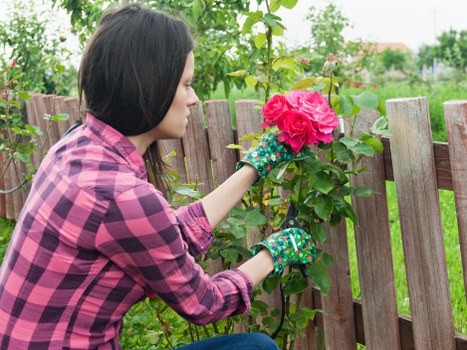 We also recognise the role of partnerships with charities in making sustainability more meaningful. Usable surplus materials, healthy plants, planters, tools, and selected site furniture may be redirected to local charities, community gardens, and organisations that support education, wellbeing, or urban greening. Where items are still serviceable but no longer needed for a project, donation helps extend product life and reduce the demand for new materials. These partnerships also support local planting initiatives, giving a second life to shrubs, compost, and supplies that might otherwise be discarded. For Fitzrovia garden recycling, this charitable route can be as valuable as conventional recycling because it keeps resources in active use for longer.
Low-Carbon Vans and Cleaner Site Logistics
Transport is one of the biggest contributors to the carbon footprint of any urban landscaping operation, which is why we are continuing to invest in low-carbon vans and cleaner fleet planning. Electric and hybrid vans are increasingly practical for central London routes, especially for short-distance material collection, tool transport, and light waste movement. Where electric vehicles are used, charging is scheduled to align with off-peak energy demand whenever possible. This reduces emissions, limits noise, and supports cleaner air in a dense neighbourhood environment like Fitzrovia.
We also reduce vehicle impact by planning smarter journeys. Deliveries, collections, and waste runs are grouped to cut redundant trips, and loads are consolidated so that transfer station visits are as efficient as possible. In a place where loading bays, timing restrictions, and road congestion all matter, careful route planning is an important sustainability measure in its own right. By combining better logistics with lower-emission vans, landscape recycling in Fitzrovia becomes more than a disposal process; it becomes a practical climate action.
Our recycling model is supported by an ongoing review of performance. We monitor how much material is reused, recycled, composted, or diverted from landfill, and we use that data to improve future work. If a project produces more timber than expected, or if a soil removal can be paired with a clean aggregate recovery stream, we adjust the plan. This flexible, data-led approach helps keep the recycling percentage target realistic while still pushing toward stronger environmental results.
Working with Local Systems and Responsible Recovery
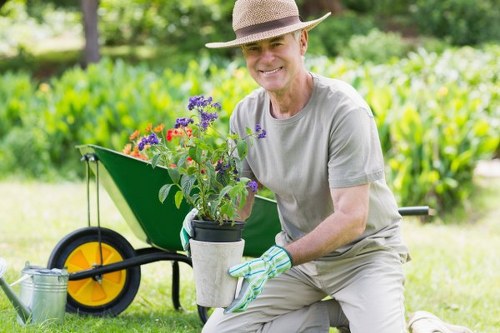 Central London boroughs often place strong emphasis on separation of recyclable materials, and we reflect that logic in our day-to-day landscaping practice. Green waste, inert waste, plastics, metals, and general waste are handled as separate categories wherever possible, because mixed waste can reduce recovery rates. For Landscaping Fitzrovia sustainability, that separation is essential. It improves the chance that materials are processed correctly, supports local facilities that rely on clean inputs, and aligns our work with borough recycling standards that encourage careful sorting and reduced contamination.
We also pay attention to the origins and destination of each material stream. Soil that can be screened and reused is kept in circulation where suitable. Clean hardcore may be sent for crushing and reprocessing. Untreated wood can be directed toward biomass or recycling routes where accepted. Even packaging from delivered materials is checked for responsible disposal. This attention to detail is part of a broader commitment to sustainable landscaping in Fitzrovia, where every stage, from demolition to final planting, offers an opportunity to reduce environmental harm.
 In a neighbourhood known for dense streets and active redevelopment, sustainable waste management is not optional; it is part of delivering professional landscaping responsibly. Our work combines local transfer station use, charity partnerships, lower-carbon transport, and borough-aware waste separation into one practical system. By targeting an 85% recycling and reuse rate and continually improving our methods, Landscaping Fitzrovia aims to support greener outdoor spaces while keeping valuable materials in use for as long as possible.